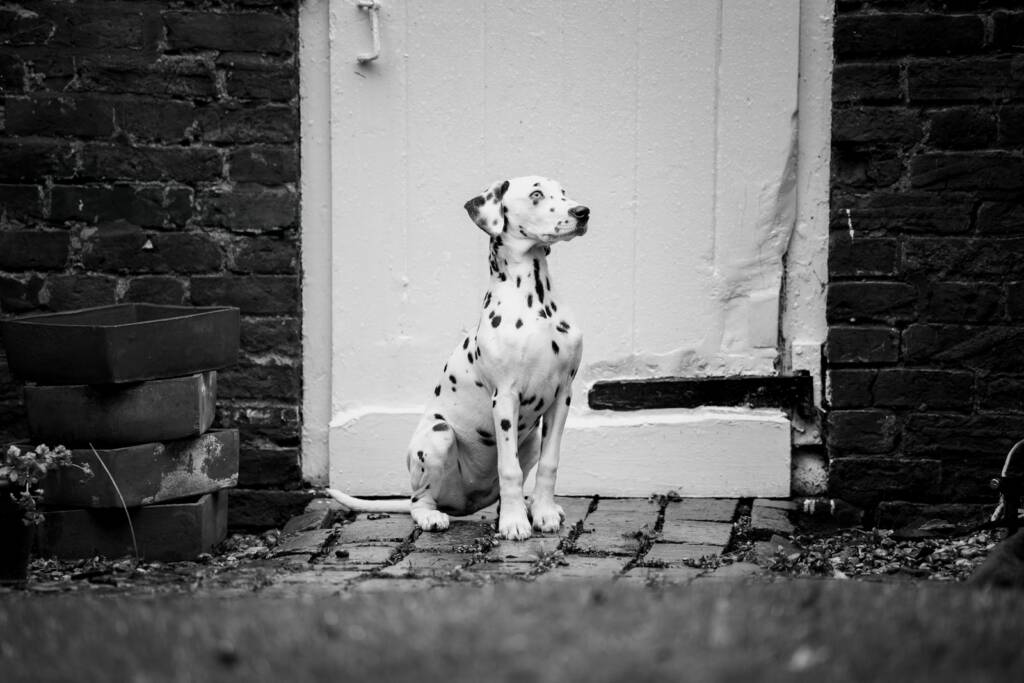
Watch an owner ask their dog to sit at the door. The dog sits. The owner opens the door. The dog bolts. The owner says “he knows sit, he just doesn’t listen.” He listened fine. Nobody ever told him when sit was over, so he decided.
That’s the whole problem with most pet dog training, and the fix is two words. I use “all done.”
What’s actually going on
A sit, a down, a stay, a place. Every one of those has a start, and your dog knows the start because you said the word. What they don’t know is the end. If you never define the end, your dog defines it. Usually the end is “when something more interesting happens.” The door opens, the squirrel moves, the kid walks by with a sandwich. Your dog isn’t blowing you off. He’s filling in a blank you left.
A release cue closes that blank. Sit means sit until I say all done. Place means place until I say all done. Now the behavior has edges, and a behavior with edges is one your dog can actually hold onto, because they’re not guessing.
Here’s the part that surprises people. Once the dog understands that every job ends with all done, the job itself gets easier for them. They stop scanning for the exit, because they know the exit is coming and it comes from you. The dog who used to vibrate on place, popping up every ten seconds to check if he’s allowed, starts to settle. Not because he got more obedient. Because the question got answered.
Why the common fixes backfire
Most people try to fix the bolting with a longer stay, repeated louder. “Stay. Stay. STAY.” What the dog learns from that is that stay is a word you say a lot, and that it ends when you stop saying it and reach for the door handle. You’ve accidentally made the door handle the release cue.
Others let the dog release themselves and then correct them for it. That one’s unfair. The dog did what you asked. You just never said when it ended. Correcting a dog for ending a behavior you never closed teaches them that sit is a trap.
Impulse control is a muscle, not a personality
The dog who can’t wait at the door, can’t leave the dropped food, can’t stop barking at the window, has the same underlying problem. He doesn’t have a reliable way to hold himself in place while something exciting is happening. A release cue is how you build that. Every time your dog holds a sit while the door opens, and gets released after, that’s one rep of “I can wait and good things still come.” Stack a few hundred of those and you have a different dog. Calmer in the car. Easier at the vet. Less of a lunatic when guests come over.
And the release becomes the reward. The dog learns that holding the position is what gets them the thing they want. That’s a dog who starts offering stillness on his own, because stillness has paid off over and over.
The other job of all done
This is the part I don’t see other trainers teach, and I think it’s half the value. I use all done to tell the dog I’m off the clock. Training session is over. The game is over. I’m done petting you. It’s your time now, go do dog stuff.
Dogs who never get that signal hover. They stare. They nudge your hand. They follow you room to room waiting for the next instruction, because as far as they know, the session never ended. A clear all done, followed by me actually walking away and ignoring them, teaches the dog that there’s a difference between working time and their own time. You get a dog who can relax when nothing is happening, and a dog who comes in sharper when you do ask for something, because they know the difference.
How to teach it
Ask for a sit. Wait one second. Feed a treat or two while they’re still sitting, then say “all done” in a calm, normal voice and step back so they get up and move. No treat after the release. The paycheck happens in the sit. The release is just the end. That’s it. Your body stepping back is what teaches them all done means move. Do that ten times.
Then start stretching the second to three, five, ten, before the release. If the dog gets up before you say it, no scolding, just quietly reset the sit and release sooner next time. You went too long.
Once the word is solid, use it everywhere. Before meals: sit, bowl goes down, all done. At the door: sit, door opens, all done. End of a petting session: all done, hands off, walk away. End of a training session: all done, and go do something else.
Try this today
Tonight, before dinner, ask your dog to sit with the bowl in your hand. Count to three. Put the bowl down while they hold the sit, then say all done and let them eat. That’s one rep. Tomorrow count to five. By the end of the week your dog is sitting on their own when the bowl comes out and waiting for the word, and you just built the foundation for every impulse-control problem you have.
If you’ve got a dog who can’t hold anything for more than a second, or the bolting is at the door and it’s a safety problem, that’s an in-home lesson. The release cue is where I start with almost every dog, and it’s a lot easier to build it right the first time than to untangle a dog who’s been releasing himself for three years.
When we build it together, you’re not trying to remember what I showed you. You get a homework sheet the same day, and in our programs you get video of your own dog doing it, so you can see exactly what it should look like.
Written by Ivan Rios, CDT