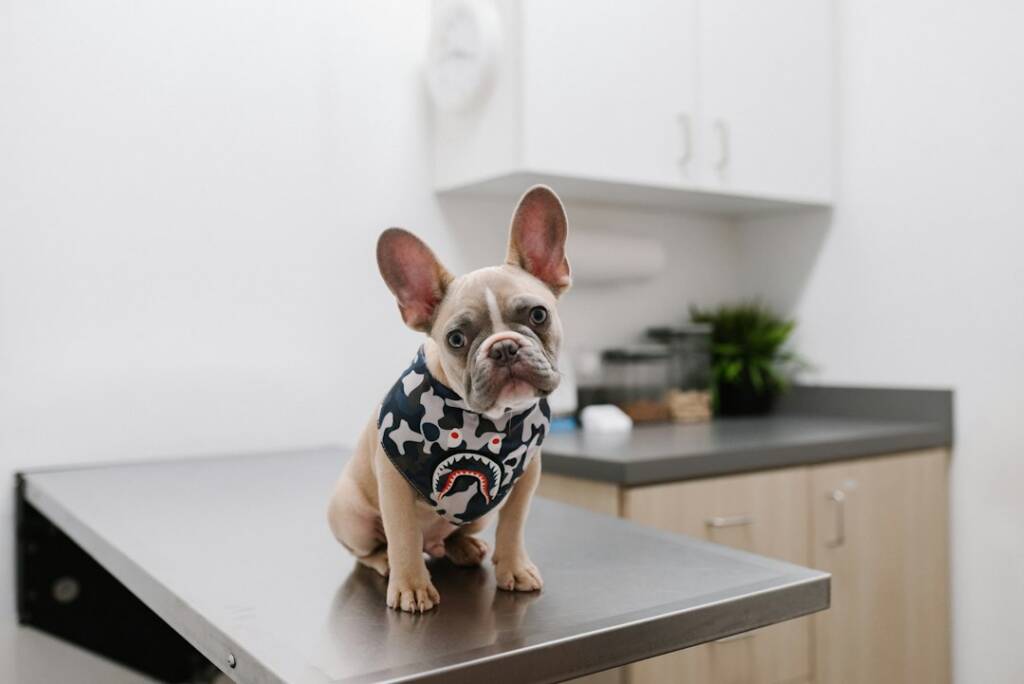
About once a month someone tells me, a little embarrassed, “the vet wants to put him on Prozac.” It’s usually followed by “but I don’t want to drug my dog.” And just as often I get the opposite call. The dog has been on medication for two months, nothing has changed, and they want to know why the pill isn’t working.
Both of those come from the same mix-up. Medication and training do two different jobs, and most dogs who need one of them do best with both.
What medication actually does
A behavior medication doesn’t teach your dog anything. No pill knows what “sit” means or that the mailman isn’t coming to kill everyone. What the right medication can do is turn the volume down on fear and anxiety, so your dog’s brain is in a state where learning can actually happen.
That matters more than people think. A dog in full panic isn’t ignoring you. The thinking part of the brain is basically offline, and you can’t train through that. You can’t reward a dog who’s too scared to take a treat, and you can’t teach a new habit to a dog who’s practicing the old one twenty times a day at full volume.
So think of it this way. Medication opens the door. Training is what walks through it.
That’s not just my take. The FDA-approved version of fluoxetine for separation anxiety was studied alongside a behavior plan, not instead of one. And the veterinary behaviorists who handle the toughest cases describe the best treatment as multimodal: medication, management, and behavior work, all at the same time.
Why both camps get stuck
“I don’t want him drugged.” Fair concern, wrong picture. The goal of a behavior medication is a dog who is still completely himself, just not drowning. If your dog seems zonked or flat, that’s a conversation with your vet about the drug or the dose, not proof that medication is bad. Meanwhile, every day a dog spends in panic is another day of practicing panic, and that gets harder to undo the longer it goes.
“The pill should have fixed it.” It won’t, not by itself. A lot of daily behavior meds take several weeks to reach full effect, and even then they make learning possible. They don’t do the learning. If nobody changes the routine, the setup, and what the dog gets to practice, you end up with a slightly calmer dog doing the exact same thing.
Here’s one I run into every Fourth of July. An old-school sedative makes the dog lie still, everybody relaxes, and the dog is still terrified on the inside. Veterinary behavior groups specifically warn against acepromazine for fireworks and thunder because it doesn’t treat the fear. A dog who’s scared and can’t move isn’t a calm dog. If your dog panics at loud noises, ask your vet about the newer options made for exactly that.
When to ask your vet about medication
I’m a trainer, not a vet. I don’t pick medications or doses, and nobody who isn’t your vet should either. But I’m usually the one who sees the signs first, and these are the ones that make me say “talk to your vet.”
Your dog can’t eat around the trigger. Not their dinner, not even the best treat in the house at a distance. Food refusal is one of the clearest signs a dog is past the point where training can reach them.
It’s panic, not protest. Drooling, shaking, trying to dig or chew their way out, hurting themselves to escape a crate or a room. That’s a distress problem, not a manners problem.
Recovery takes forever. A dog who startles and shakes it off in a minute is normal. A dog who’s still pacing and scanning the windows an hour later is telling you something.
The fear is everywhere. It isn’t tied to one thing anymore. New places, new people, sounds, being alone, all of it.
You’re stuck. You’ve had a solid plan with good help for a couple of months and you’re at the same spot you started.
And if the change is sudden, in an adult dog who used to be fine, that’s a vet visit first no matter what. Pain changes behavior.
When you go, bring video, and make it the real thing. Don’t stage it. Don’t ring your own doorbell or walk your dog past the neighbor’s fence just to get a reaction on camera, because setting your dog up to panic for a clip is one more rep of panic. You live with this dog. You know the mail truck shows up at 2 and the meltdown starts at 1:58. Have your phone ready and catch the one that was going to happen anyway. Your vet sees your dog for twenty minutes in an exam room, and thirty seconds of the real thing at your front door tells them more than any description. Same goes for the video you send me. For the complicated cases, ask about a veterinary behaviorist, a vet who is board-certified in behavior. And if your dog is already on a daily medication, don’t stop it cold turkey. Your vet will tell you how to taper.
When to call a trainer
If your dog can eat, take treats, and bounce back within a few minutes, you’re most likely looking at a training problem. Pulling on the leash, jumping on guests, barking at the window, the teenager who suddenly forgot every cue they knew. That’s my lane. Call a trainer.
And if your dog has just started medication, call a trainer too. That’s the window. Your vet handles the brain chemistry and we build the new habits while the door is open. Tell us what your dog takes and what your vet’s plan is, and we work with your vet, not around them. If your dog is with us for day training or board and train, their meds go on our schedule exactly the way your vet wrote them, and you see what we worked on in every Pupdate. Your homework is built for the dog you actually have that week, not a textbook one.
One line I’ll draw clearly. If your dog has bitten a person or is aggressive toward people, that isn’t what I take on. Your vet and a veterinary behaviorist are the right first call, and I’ll point you to a specialist I trust.
Try this today
Do the treat test. The next time your dog is worried about something, the doorbell, a dog across the street, the vacuum coming out, offer the best treat you’ve got and watch what happens.
If they take it gently and look back at you, that’s usually a training problem, and you can start working on it now. If they snatch it hard, they’re on edge but still with you. If they won’t take it at all, they’re over their limit.
Write down which one you got, where you were, and how far away the trigger was. Do it a few times this week. If “won’t take it” keeps showing up, bring that list and a video to your vet and ask whether medication belongs in the plan. If it’s mostly “takes it,” that’s work we can start tomorrow.
Not sure which side of the line your dog is on? That’s exactly what an In-Home Consult is for. I watch your dog in your house, and I’ll tell you honestly whether you need me, your vet, or both.
Written by Ivan Rios, CDT