After the last post went up, I got a bunch of messages that all asked some version of the same question. “Okay, so now I know why my dog is reactive. How do I actually fix it?” Fair question. And the answer usually surprises people, because it’s the opposite of what most of the internet tells you to do.
The advice you’ll find everywhere is some version of “get them around more dogs” or “take them to busy places until they get used to it.” That’s not socialization. That’s flooding, and it almost always makes a reactive dog worse. Every time your dog goes over threshold and has a meltdown, they’re rehearsing the exact behavior you’re trying to get rid of. You’re not desensitizing them. You’re giving them more practice at panicking.
Real socialization for a reactive dog starts with distance, not exposure. I want that dog seeing triggers from far enough away that they can notice them and stay calm. That might mean standing across a parking lot instead of walking past another dog on the sidewalk. It feels painfully slow at first, especially if you’re used to thinking of socialization as “get them out there.” But a dog that stays under threshold is learning something completely different than a dog that’s melting down. One is learning the world is manageable. The other is learning to panic faster.
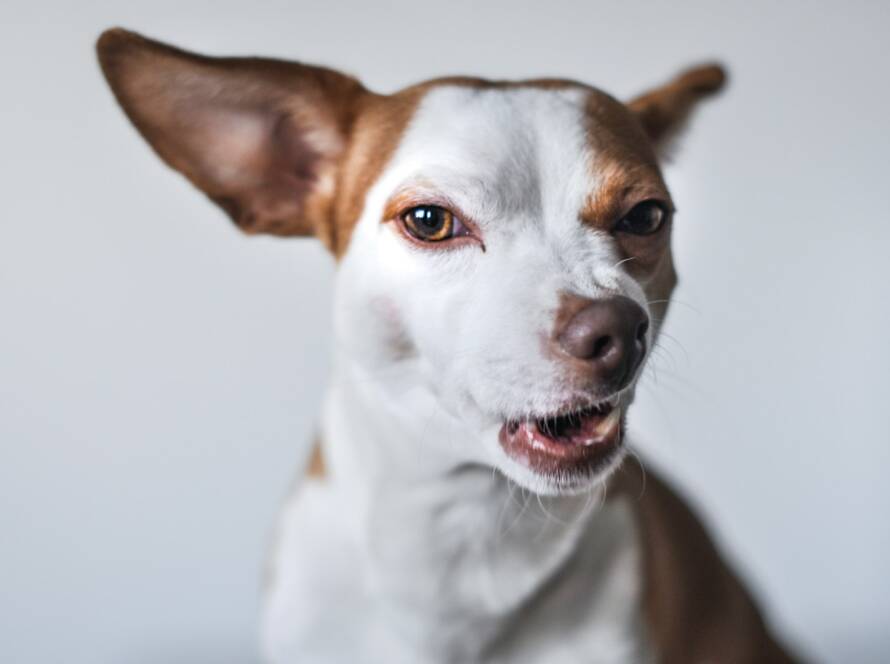
This is where most people get stuck, because staying under threshold means reading your dog’s body language before the reaction happens, not after. Ears pinning, a hard stare, a closed mouth, weight shifting forward or back. Those show up before the barking and lunging starts. If you’re only reacting once your dog is already losing it, you’re already too close. Part of what I do with clients is teach them to see these signs early enough to create distance before it turns into a scene.
Once a dog can stay calm at a distance, the next piece is pairing the trigger with something good. Dog appears in the distance, dog gets a piece of chicken. Not as a bribe, and not because I’m trying to distract them. I’m building a new association. Trigger predicts good things, instead of trigger predicts danger. Over time, and I mean weeks and months, not one walk, you’ll be able to start closing that distance. Too many people try to rush this part because the progress feels slow, and I get it. As pet parents, we’re wired to want results, and watching your dog do the same lap around the block for the fifth week in a row without any obvious improvement can make you want to push harder than you should.
After more than a decade doing this work, I’ve come to think of reactivity itself a lot like a drug. Every time your dog barks and lunges and the trigger goes away, whether that’s a stranger crossing the street or another dog getting pulled off in the other direction, your dog’s brain gets a hit of relief. That relief is the reward, and just like any addiction, the more they use it, the stronger the pull to reach for it again next time. A dog that’s been rehearsing that reaction for two years has worn a much deeper groove into that pattern than a dog that only started a few weeks ago, and it takes real, repeated work to build something strong enough to compete with it.
That doesn’t mean it can’t be done. It means you’re not flipping a switch, you’re competing with a habit that’s been rewarding itself for a long time, and building a new one in its place takes time. Your dog will make progress, and it’ll be slow, but as long as you stay consistent, it keeps moving forward. It won’t move in a straight line though. You might have two solid months of steady improvement and then two or three days where your dog reaches for that old pattern again, seemingly out of nowhere. That doesn’t mean you did something wrong, and it doesn’t mean the work stopped counting. It usually just means that old groove is still there, and every rep you put in after that is what wears it down.
Decompression matters more than people think too. A reactive dog that’s stressed all day doesn’t have any patience left for a trigger that shows up unexpectedly. Sniffy walks in low pressure areas, time in the yard, a good chew session, actual rest. A dog running on empty is a dog with a short fuse. I’ve had clients fix half their reactivity problem just by giving their dog more decompression time and fewer stressful outings, before we even got to the training part.
I also want to be honest about something. Not every dog needs to become the dog that can walk past twenty other dogs at the farmers market without a reaction. That’s a nice goal for some dogs, but for others, the real win is a dog who can see a trigger, stay under threshold, and keep walking. Management is not a consolation prize. Crossing the street, choosing quieter routes, using a longer leash for space, these are legitimate tools, not things to be embarrassed about while you’re doing the deeper work.
And this is exactly where having someone in your corner matters. Socializing a reactive dog isn’t something you figure out from a blog post, mine included. It takes reading that specific dog, adjusting distance and criteria in real time, and knowing when to push a little and when to back off. I’ve watched dogs go from full blown meltdowns on leash to calmly clocking a trigger and moving on, and it never happened by accident. It happened because someone was managing every rep along the way.
If you’re in the middle of this with your own dog and it feels like nothing is working, it’s probably not that your dog can’t get there. It’s that the plan needs to change. Give us a call and let’s build one that actually fits your dog.
Written by Ivan Rios, CDT