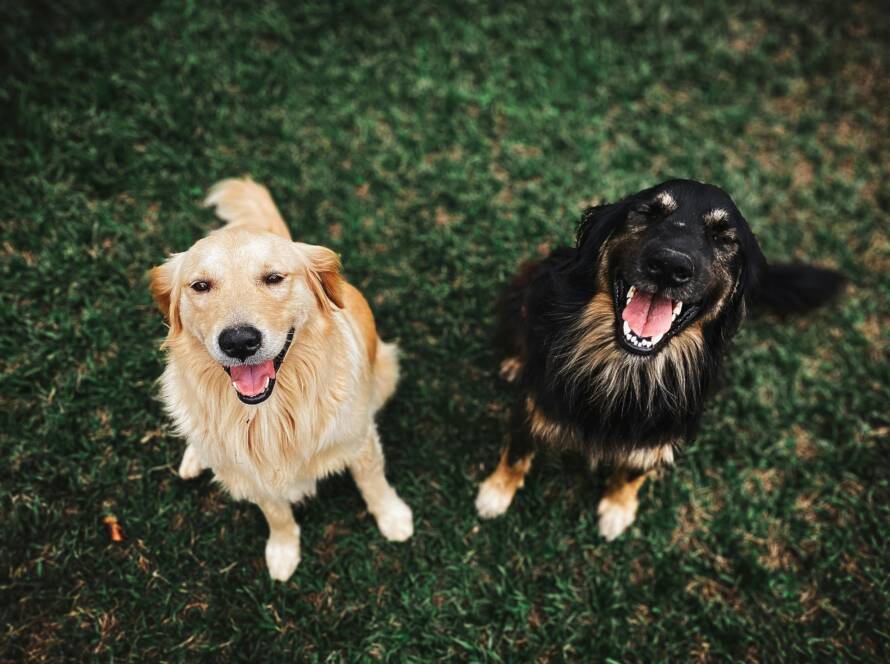


Drop your dog off for board and train and there’s a stretch where you genuinely don’t know what’s happening on the other side of that door. You signed up for “training,” but training could mean anything from a few tricks to a total personality transplant, and you’re sitting at home wondering which one you’re actually getting.
So here’s what actually happens, start to finish.
Before your dog even gets a crate assignment, we do a real assessment. Not a checklist, an actual look at how your dog moves through the world. What sets them off, what motivates them, where their confidence is solid and where it’s shaky. A dog who’s food motivated and a little nervous around men gets a completely different plan than a dog who’s confident, a little pushy, and could not care less about treats. Training every dog the same way is how you end up with a dog who “knows” commands but falls apart the second real life gets complicated.
From there we build a plan around that specific dog. Every dog in board and train gets three individual one hour lessons a day, broken up with daycare play and socialization in between so it’s not just drilling the same exercises back to back all day. Obedience is in there, sit and stay and come, but a lot of the real work is behavior. Impulse control, leash manners, how to settle in the house instead of bouncing off the walls, how to greet people without turning into a linebacker.
I know the hardest part of board and train for most owners isn’t the dog, it’s the not knowing. That’s why twice a week I record one of those lessons and send it over, walking you through every exercise we’ve built on so far, step by step, talking you through exactly what I’m doing and why. Not “he’s doing great,” but watching what great actually looks like, so you know how to ask for it yourself once he’s home, because you’re the one who’s going to be maintaining this.
And that’s the part people underestimate. Training isn’t something that happens to your dog while you wait at home and then gets handed back to you finished. Graduation day isn’t the finish line, it’s the handoff. We spend real time walking you through exactly what your dog learned and how to keep it going, because a dog who’s brilliant with me and falls apart the second he’s back with his own family didn’t actually get trained, he got babysat with good manners for a few weeks.
The dogs who come out of this program and stay solid a year later are the ones whose owners took that handoff seriously. That’s the whole goal, not a dog who performs for a stranger, but a dog who’s genuinely easier to live with, for you, long after we’re done.
Written by Ivan Rios, CDT
If you’re considering board and train and want to talk through whether it’s the right fit for your dog, reach out. I’m happy to walk you through it.